Our Culture
Our Hmong Culture
Before you visit, a little about the people you’ll be spending time with — told by someone who grew up inside it, not studying it from outside.
Read OnIntroduction to the Hmong People
The Hmong are one of Vietnam's ethnic minority communities, with a much longer history across the mountains of southern China, Laos, Thailand, and Vietnam. My family belongs to the Hmong community here around Sapa — one of several Hmong groups in this region, each with its own dialect, dress, and customs that differ from village to village. I can really only speak confidently about my own family and the village I grew up in — even within Sapa, customs vary between villages, so please read everything below as one family's culture, not a textbook description of “the Hmong” as a single, unchanging thing.
Life in the Mountains & Farming
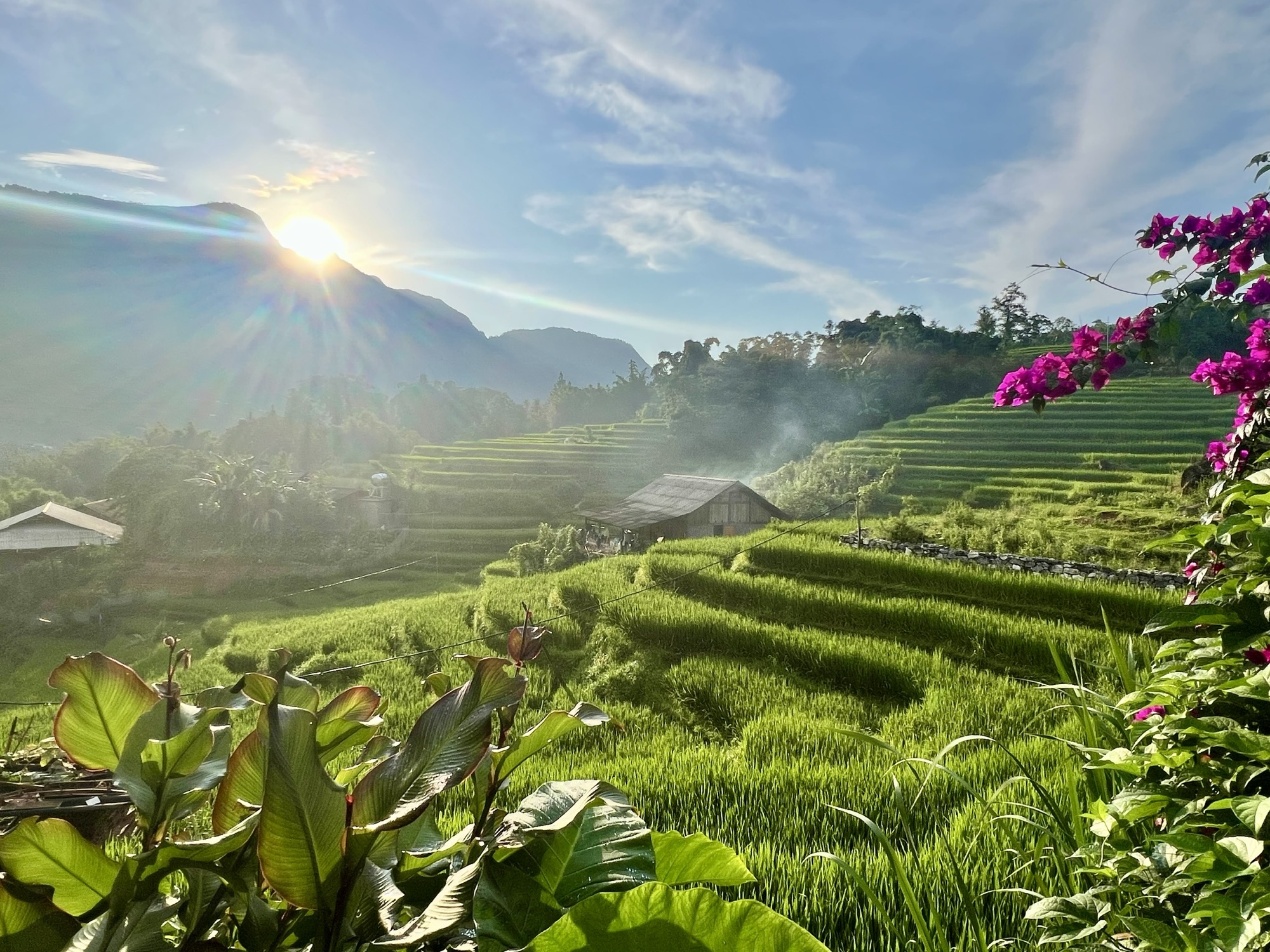
Everything here is built around the terraces. My family has farmed the same terraced fields for generations — not because there was no other option, but because this land, worked well, actually feeds a family, and that knowledge (which slopes hold water, when to plant, how to read a season) took generations to build and is worth keeping.
You’re not walking through a museum of a simpler past — you’re walking through work that’s still happening, this week, the same as it was last week.
Traditional Clothing, Indigo & Hemp
The clothes you'll see aren't a costume put on for visitors — they're what my mother and grandmother actually wear, made from hemp we grow ourselves and indigo dye prepared the way it always has been, not bought in a bottle. It takes weeks to get a piece of cloth to the color my grandmother wants.
See the full process in the Craft & Culture Experience →Embroidery & Handcrafts
The embroidery patterns are taught hand to hand, not written down anywhere — I still remember my grandmother teaching me by lamplight, stitch by stitch, without ever drawing the pattern out for me first. Some patterns are specific to a family line, and I can only really speak to what they mean in mine.
Read more about learning this craft →Family, Community & Village Life
Multiple generations often share one home, and daily life moves around the household and the fields rather than a fixed schedule. Neighbors help each other at planting and harvest time. If you stay overnight, you'll see this directly rather than have it described to you.
See the Homestay & Living Culture Experience →Traditional Food
Meals are simple and mostly grown or raised at home — rice, seasonal vegetables, and dishes cooked over a wood fire rather than a stove. Food here is less a “cuisine” to sample and more just what a family actually eats, which is exactly what makes sharing it meaningful.
See what a shared meal actually looks like →Festivals & Celebrations
Hmong New Year is the year's biggest celebration, usually gathering extended family together, with new embroidered clothes prepared specifically for it. It's less a “show” for outsiders and more the one time of year everyone actually comes home.
Respecting Local Culture & Supporting Communities
Photography etiquette
Ask before photographing any person directly — a smile and a gesture is enough even without shared language. Photos of landscapes, terraces, and crafts in progress don't need the same permission.
Visiting local homes
Remove shoes before entering, keep voices low during quiet hours, and treat the home as someone's actual house, not a cultural exhibit.
Supporting local artisans
Buying a handmade textile or craft directly from the person who made it is one of the most direct ways a visit benefits a family — ask about the piece, not just the price.
Buying handmade products ethically
A fair price reflects real hours of skilled work — bargaining hard over a handmade piece the way you might at a mass-market souvenir stall undervalues the actual labor involved.
Environmental responsibility
Stay on marked paths through farmland, carry out any trash, and be mindful that terraces are working agricultural land, not a park.
Frequently Asked Questions
Come experience it in person.
Reading about it is one thing — a day in the village is another.